
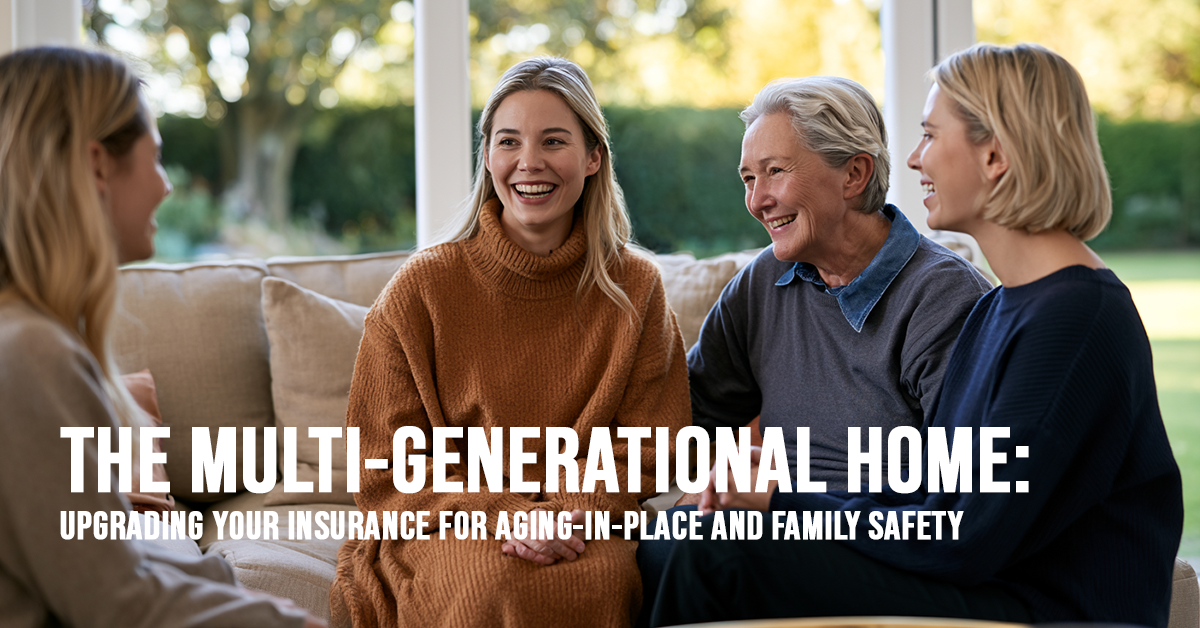
The Multi-Generational Home: Upgrading Your Insurance for Aging-in-Place and Family Safety
On August 21, the nation observes National Senior Citizens Day, a dedicated celebration honoring the contributions, wisdom, and vitality of older adults. Across America, demographic and economic shifts have driven a significant rise in multi-generational households, where grandparents, parents, and children share a single roof. While this living arrangement fosters deep family bonds and shared support, it also fundamentally alters the risk profile of your residential property.
When you modify your home to accommodate aging family members—often referred to as “aging-in-place” renovations—your homeowners insurance needs an immediate, comprehensive review. Failing to update your policy to reflect these physical and structural changes can leave you severely underinsured in the event of a claim.
The Insurance Implications of Aging-in-Place Renovations
Transforming a standard home into an accessible sanctuary involves significant structural alterations. From an actuarial standpoint, these changes directly impact your property’s replacement cost and liability exposure:
- Ramps, Railings, and Walk-In Tubs: Installing exterior wheelchair ramps, reinforced bathroom grab bars, walk-in showers, and stair lifts enhances safety, but it also increases the total structural replacement value of your home. If a major fire occurs, standard policy limits may fall short of covering the custom carpentry and specialized plumbing required to rebuild an accessible home.
- Premises Liability and Slip-and-Fall Risks: As households grow to include elderly family members or visiting senior guests, the statistical probability of a slip-and-fall accident rises. While family members are typically covered under standard medical payments provisions, severe injuries can lead to complex liability disputes. Ensuring your liability limits are elevated from the standard $100,000 baseline to $500,000—or securing a personal umbrella policy—is a vital protective measure.
- Medical Equipment Coverage: Durable medical equipment (DME) brought into the home—such as specialized hospital beds, oxygen concentrators, or motorized mobility devices—represents a substantial financial investment. Standard homeowners policies limit coverage for personal property stored or used off-premises, and high-value medical hardware may exceed standard contents sub-limits, requiring scheduled endorsements.
Proactive Steps for the Modern Household
To ensure your multi-generational home remains a secure sanctuary rather than a financial liability, schedule a policy review with your insurance agent. Document all physical renovations with photographs and contractor receipts, verify that your dwelling coverage limit reflects the true current cost of specialized rebuilding, and ensure your liability umbrella provides absolute peace of mind for every generation under your roof.